Complete Guide to Shop Floor Management
Want to run your factory floor smoothly without stress? Learn what shop floor management is, 5 key pillars, dos and don’ts, and easy tools!
Table of Contents
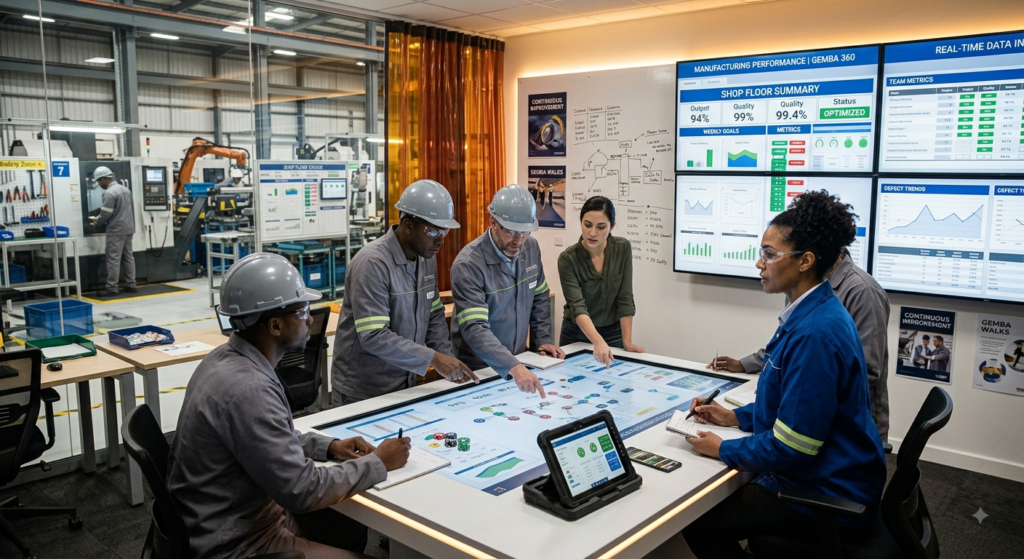
Shop Floor Management Made Easy: The Simple, Stress-Free Guide
Imagine you are baking cookies in your kitchen with three friends. One friend is mixing dough, one is rolling it out, and another is putting it in the oven.
Now imagine if no one was talking! The oven gets too hot, the mixing bowl spills on the floor, and you suddenly realize you ran out of sugar. Sounds like a total mess, right?
That same mess can happen in big factories where products like toy cars, shoes, or smartphones are made. In the business world, the physical area where products are made is called the Shop Floor. And making sure everyone works together, uses the right tools, and stays safe is called Shop Floor Management.
In this simple guide, we will break down shop floor management so clearly that anyone—even a middle schooler—can understand how factories run smoothly, avoid mistakes, and deliver top-quality products on time!
💡 EASY ANALOGY: Think of a shop floor manager as the head chef in a busy kitchen. If the chef plans well, every guest gets hot, delicious food on time! |
What Exactly is Shop Floor Management?
At its heart, Shop Floor Management (SFM) is the art of overseeing all the activity happening live inside a manufacturing space. It includes workers, machines, materials, and processes.
When done right, SFM makes sure of three major things:
- Zero Waste: No time or materials are wasted.
- Top Quality: Every product made is super high quality.
- Safe People: Every worker stays safe and happy while doing their job.
The 5 Pillars of Great Shop Floor Management
To keep a factory floor running like a clock, managers focus on five basic pillars. Here is a clear breakdown:
Pillar | What It Means | Simple Kitchen Analogy |
1. People | Taking care of workers, training them, and making sure everyone has a safe role. Tools like a HR Management App help keep this organized as a shop grows past a handful of employees. | Assigning one baker to mix and one to bake so no one bumps heads. |
2. Equipment | Keeping machines in great shape so they don’t break down unexpectedly. | Cleaning and servicing the oven regularly so it never burns the cake. |
3. Materials | Tracking supplies so workers never run out of raw parts mid-job. | Checking the pantry to ensure you have enough flour before starting. |
4. Process | Following step-by-step instructions so every product comes out identical — this is exactly what digital setup sheets are built to enforce in a CNC environment. | Using a standard cookie recipe so every batch tastes delicious. |
5. Environment | Keeping the workspace clean, organized, well-lit, and completely safe. | Wiping counters and sweeping floors so nobody trips or slips. |
How Good Management Boosts Factory Efficiency
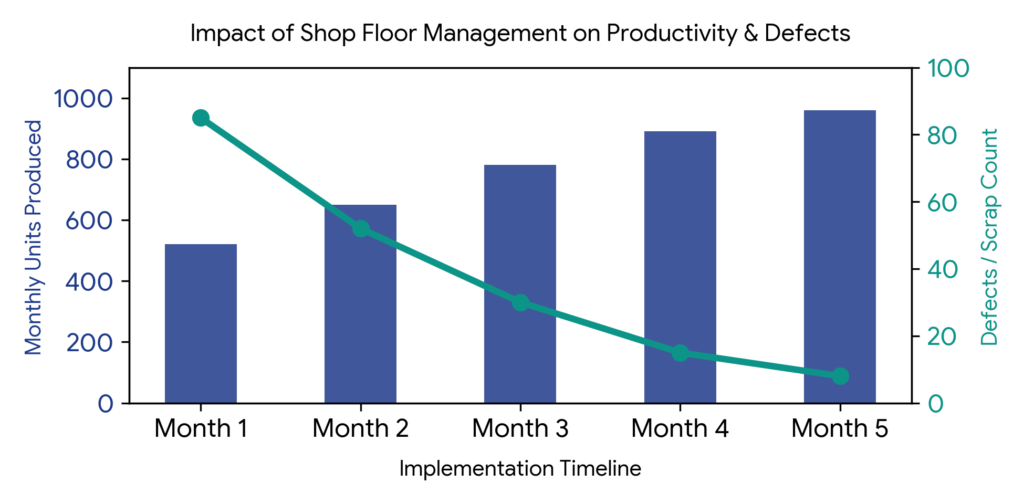
What actually happens when a factory switches from disorganized chaos to smart shop floor tracking? A peer-reviewed case study of a metalworking SME that combined 5S with preventive maintenance and setup-time reduction tools found a 10% productivity improvement, a 23.8% efficiency increase, and a 32% reduction in machine setup time — real numbers from a shop not unlike the ones reading this guide.
Golden Rules: Dos and Don'ts of Shop Floor Management
Managing a shop floor requires consistency. Follow these quick golden rules to ensure your workers stay motivated and your operations stay safe.
DO (Always Do This) 👍 | DON’T (Avoid Doing This) 👎 |
✓ Hold quick 5-minute stand-up meetings every morning (Gemba walks). | ✗ Blame workers immediately when a machine breaks down or fails. |
✓ Keep tools labeled and organized using simple systems like 5S. | ✗ Let clutter, loose cords, or discarded materials build up on the floor. |
✓ Use simple visual boards (charts/screens) so anyone sees progress. | ✗ Hide goals and metrics inside secret computer files no one views. |
✓ Encourage floor workers to share ideas for improvement. | ✗ Ignore worker feedback—they know the machines better than anyone! |
✓ Perform regular maintenance before machines actually break. | ✗ Wait until a machine completely fails and halts production. |
3 Super Easy Tools to Help You Succeed
You don’t need millions of dollars or complicated robots to manage your shop floor better. You can start today with these three simple tools:
- The 5S Method: A Japanese philosophy that stands for Sort, Set in Order, Shine, Standardize, and Sustain. Simply put: clean up, put everything in its home, and keep it clean every single day! Pairs well with a properly organized tool crib, since tooling chaos is one of the most common 5S failure points on a shop floor.
- Gemba Walk: A Japanese word meaning ‘the real place.’ Instead of sitting in a quiet office, managers walk around the actual factory floor every day to see how things are working and talk to team members.
- Visual Management Boards: Using large, visual signboards or digital screens on the factory wall that display green light for ‘good progress’ and red light for ‘needs help’. Anyone walking past can understand status in 3 seconds! Many shops now run this digitally instead of on a whiteboard — our guide on real-time shop floor tracking covers what that looks like in practice.
💡 FUN FACT: Did you know? Toyota became one of the world’s most successful car manufacturers by simply using Gemba walks and 5S clean-ups! |
Final Summary: Bringing It All Together
Shop floor management isn’t scary or complex—it is simply about keeping things clear, organized, and friendly! When you organize tools, look after your team, keep machines healthy, and track your progress visually, work becomes fun and stress-free.
Whether you make delicious cakes in a local bakery or build sports cars in a giant factory, applying these simple shop floor ideas will help you work faster, produce higher quality products, and keep everyone smiling.
As your shop grows past whiteboards and sticky notes, many of these same five pillars — people, equipment, materials, process, environment — end up needing a digital system to stay organized at scale, which is where a Machine Shop ERP usually comes in.
Frequently Asked Questions
No — the five pillars (people, equipment, materials, process, environment) apply at any size. Smaller shops can often manage with visual boards and daily walks; larger ones tend to need digital tracking to keep the same visibility.
5S is usually the easiest starting point — it doesn’t require any software or budget, just organizing and labeling what you already have.
Usually once job volume or shift count makes it hard for one person to walk the floor and know the status of everything — that’s typically when real-time tracking software starts paying for itself.
Call to Action :
Ready to transform your factory floor into a high-efficiency machine?
Pick one tool from this guide—like starting a 5-minute daily Gemba walk or labeling your workspace with 5S—and implement it today!

We help your business grow with powerful SaaS solutions
Resources
© 2026 Texono. All rights reserved.