How Tool Crib Software Radically Reduces Manufacturing Costs
Discover how tool crib software eliminates downtime, stops inventory loss, and slashes manufacturing expenses by up to 30%. Read the 5-minute guide.
Table of Contents
The Hidden Drain on Modern Manufacturing
In high-stakes manufacturing environments, profitability is often eaten away not by major machinery overhauls or market swings, but by small, invisible inefficiencies on the shop floor. Among these, unmanaged or poorly tracked tool cribs represent one of the largest controllable drivers of excess expense. From misplaced CNC inserts and missing torque wrenches to bloated safety stock, the true cost of tool mismanagement extends far beyond the price tag of a missing item.
Implementing specialized Tool Crib Management Software bridges the gap between procurement, inventory maintenance, and floor operations. By providing real-time oversight, automated tracking, and rigorous accountability, modern tool crib systems turn a traditionally reactive asset room into a lean, cost-saving operational asset.
💡 OPERATIONAL FACT |
Five Ways Tool Crib Software Cut Operating Expenses
Eliminating Tool Hoarding and Unaccounted Loss
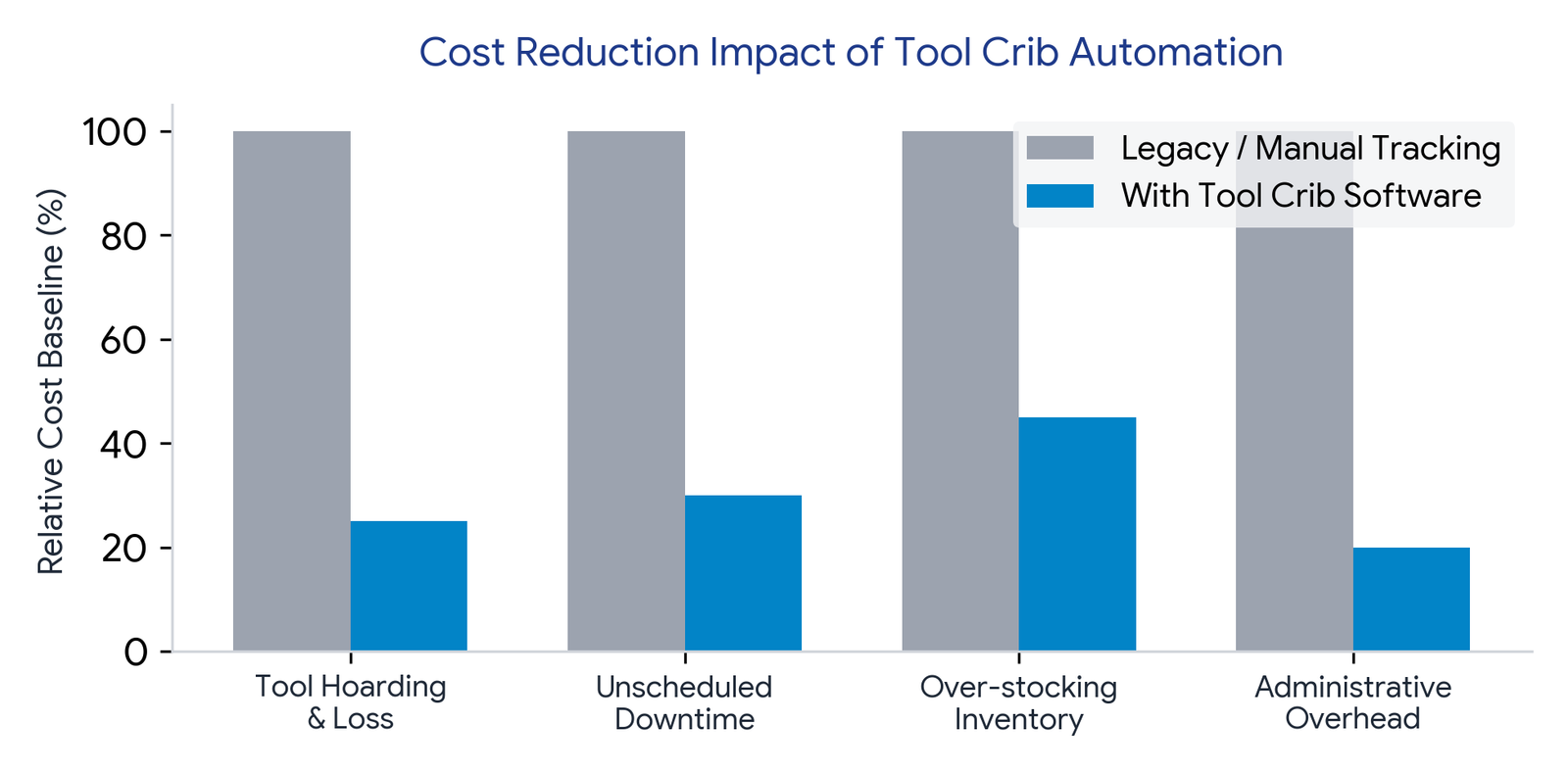
Without automated tracking, workers often hoard specialized tools at their individual workstations out of fear that the items won’t be available when needed next. This practice leads to artificial tool shortages, duplicate purchases, and high rates of missing equipment. Tool crib software enforces user accountability via badge scans or RFID tracking:
- Strict User Check-In/Check-Out: Every item checked out is logged against a specific employee, job order, and work cell.
- Automated Overdue Alerts: System flags items not returned within the prescribed shift window, prompting instant retrieval.
- Deterrence of Shrinkage: Complete transparency virtually eliminates tool theft and casual misplacement across facility floors.
Drastically Decreasing Unscheduled Line Downtime
Machine downtime is extraordinarily expensive. When a multi-million dollar cell halts because a required reamer or calibrated gauge cannot be found, the company loses thousands of dollars per minute. Integrated tool crib softwares allow pre-kitting for upcoming work orders. Operators receive all necessary tooling in advance, ensuring setup shifts run cleanly without setup delays.
Optimized Purchasing & Reduced Safety Stock
Over-purchasing stock ‘just in case’ ties up vast amounts of operational capital. Tool crib software tracks consumption trends and sets automated Min/Max reorder points. When stock drops to a critical threshold, purchase requisitions are automatically generated, preventing both stockouts and redundant capital tying.
Financial Impact Matrix
The table below details specific financial operational metrics affected by tool crib management digitization:
Cost Category | Traditional Manual Crib | Digitized Tool Crib Software | Average Cost Reduction |
Annual Tool Spend | High due to duplicate purchasing & loss | Controlled via Min/Max & usage tracking | 15% – 30% Savings |
Operator Search Time | 30–45 mins per technician/day | < 5 mins per technician/day | 85% Reduction |
Inventory Holding Costs | Bloated safety stock & idle tooling | Just-in-Time (JIT) stock optimization | 20% – 40% Reduction |
Calibration Compliance | Manual log risk; frequent audit fines | Automated scheduling & lockouts | 100% Risk Mitigation |
Admin Order Processing | Manual PO entry & vendor management | Automated electronic reordering | 60% Efficiency Gain |

Advanced Cost-Saving Features to Look For
Automated Calibration and Maintenance Lockouts
Using an uncalibrated torque wrench or worn-down cutting tool can result in entire batches of scrapped parts or, worse, catastrophic product recalls. Modern tool crib software monitors total cycles, service hours, and calibration due dates. When a tool exceeds its threshold, the system automatically locks it out from checkout until inspection and servicing are logged.
Smart Vending Machine Integration
Integrating tool crib software with point-of-use industrial vending machines decentralizes inventory storage. Workers can access consumables, PPE, and high-turn inserts directly on the shop floor without walking across large facilities, eliminating non-value-added travel time.
Conclusion: Calculating Your ROI
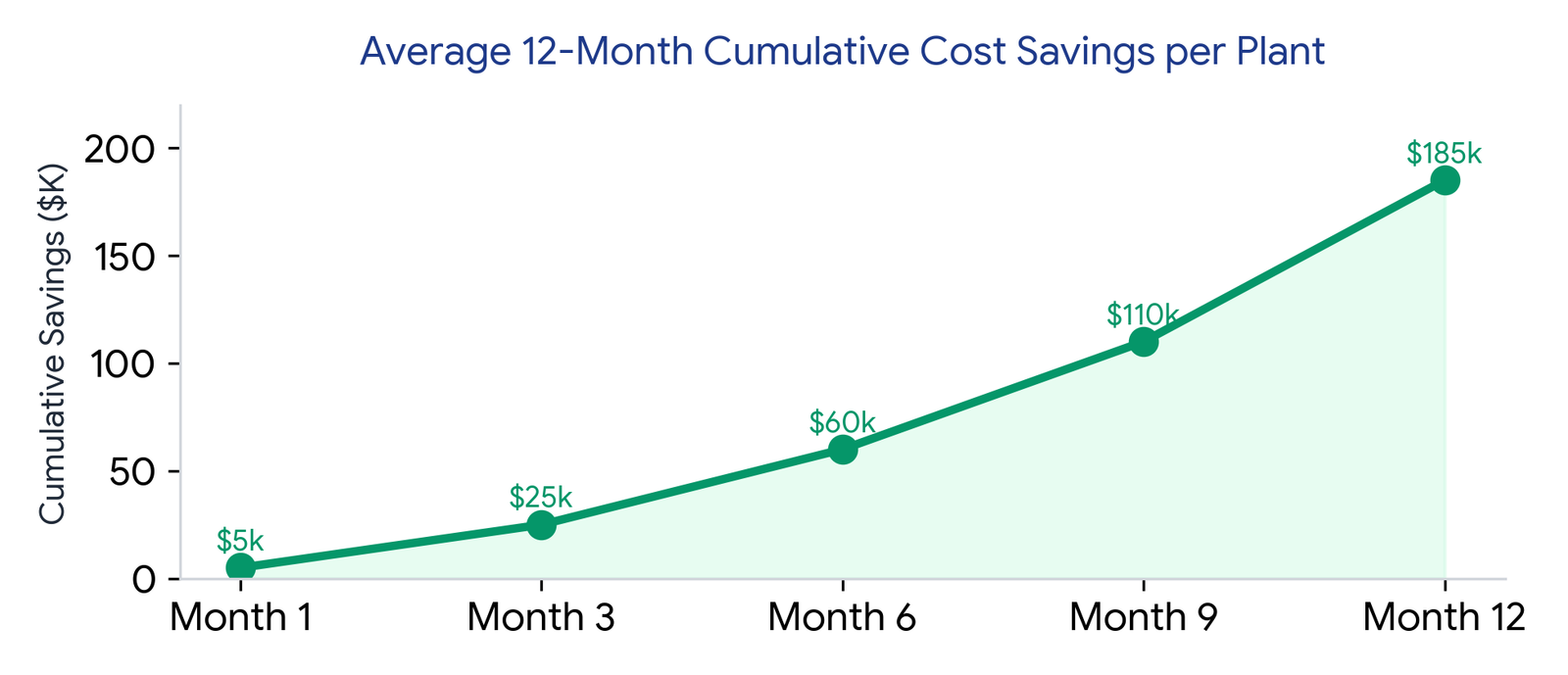
Tool crib management software is no longer a luxury reserved for tier-one automotive giants. Facilities of all sizes stand to benefit from the drastic reduction in missing tooling, labor overhead, and downtime. Most manufacturers report complete payback on software investment within the first 3 to 6 months of active deployment.
💡 ACTION ITEM FOR PLANT MANAGERS |
Call to action
See how Texono’s Tool Crib Software can reduce your manufacturing costs. Book a free demo and discover how to improve inventory control, reduce downtime, and maximize operational efficiency.

We help your business grow with powerful SaaS solutions
Resources
© 2026 Texono. All rights reserved.