How Machine Shop ERP Eliminates Production Delays: A Complete Guide
Eliminate shop floor delays and boost profits with Machine Shop ERP software. Track inventory, stop bottlenecks, and deliver on time every time.
Table of Contents
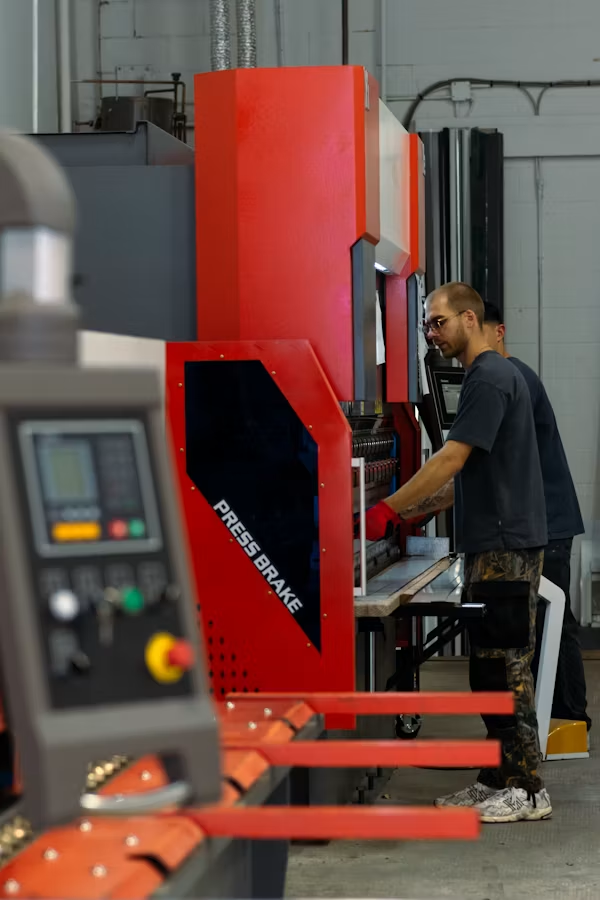
Imagine This: The Monday Morning Shop Floor Nightmare
Picture a typical Monday morning at a busy machine shop. The sun is barely up, the coffee pot is brewing, and the floor manager steps into the office expecting a smooth, productive week. Instead, chaos strikes before 8:00 AM.
- The Metal Mystery: A machinist stands waiting at a CNC station because the specialized aluminum alloy ordered last Thursday isn’t where it should be.
- The Scheduling Clash: Two urgent customer orders are assigned to the exact same cutting machine at the exact same hour.
- The Broken Tooling: A key drill bit snapped on Friday afternoon, nobody logged it, and now there is no backup in the tool crib.
Sounds familiar? If you run or work in a machine shop, this story isn’t just a hypothetical scenario—it is a daily reality that drains profits, burns out talented workers, and frustrates customers.
💡 The Hidden Cost of Delays When a job is delayed by just 2 hours a day across 5 machines, a shop loses over $120,000 every single year in wasted machine capacity and idle labor alone. |
Why Do Machine Shop ERP Delays Happen in the First Place?
Machine shops are complex environments. Unlike standard assembly lines that make the exact same plastic toy ten thousand times, machine shops craft custom parts with tight tolerances, unique materials, and multi-step processes. Managing this with whiteboards, sticky notes, and spreadsheets is like trying to air-traffic control a busy airport using paper airplanes.
The Big 5 Production Bottlenecks
Before fixing production delays, we must understand where they originate. Research across custom manufacturing facilities reveals five primary culprits:
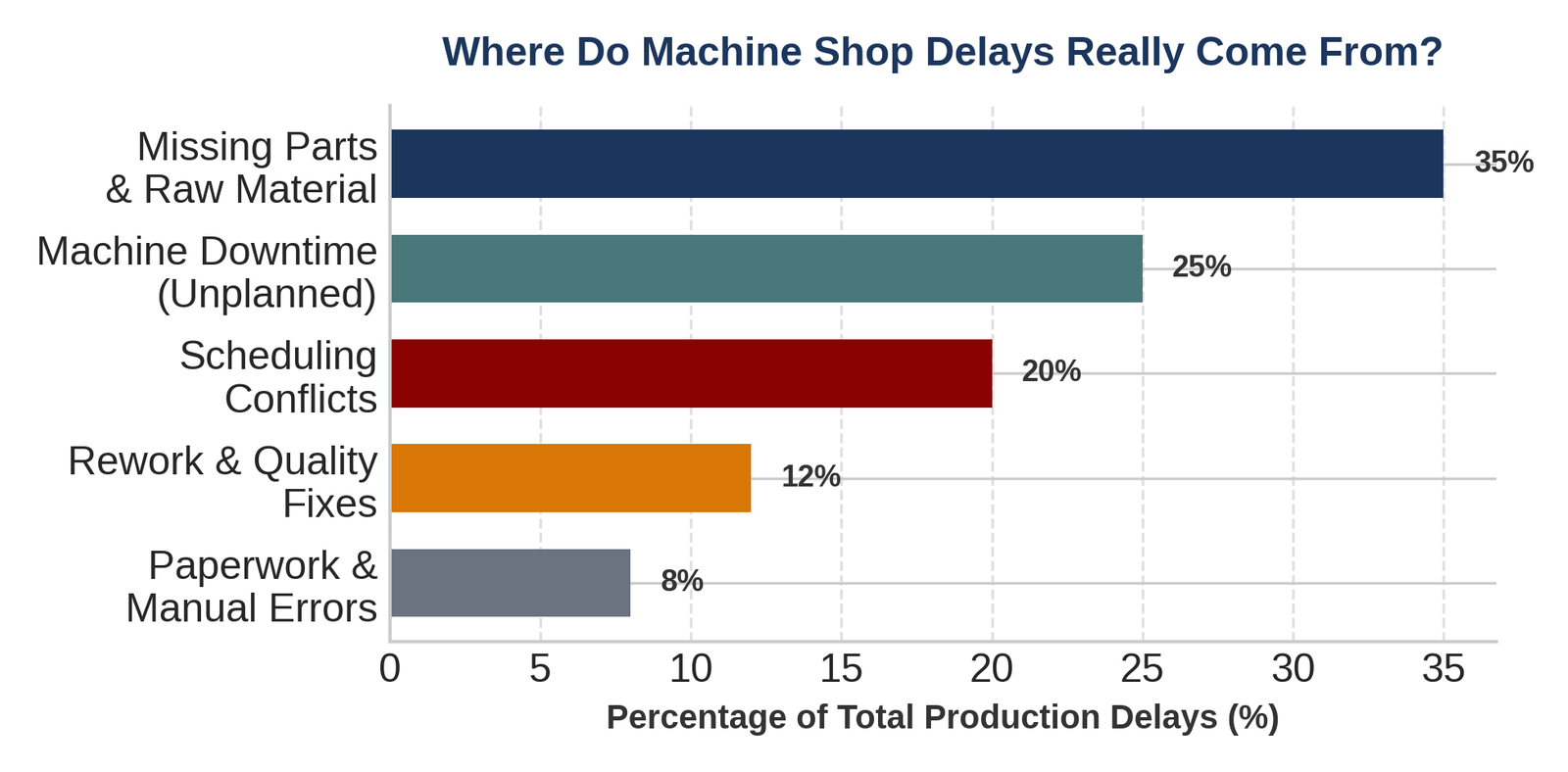
Figure 1: Percentage breakdown of typical machine shop production delay causes.
- Missing Parts & Raw Materials (35%): Job orders start before checking if raw stock or hardware is actually in stock.
- Unplanned Machine Downtime (25%): Machines break down unexpectedly due to neglected preventive maintenance schedules.
- Scheduling Conflicts & Double Bookings (20%): Overestimating machine capacity leads to overlapping job queues and floor confusion.
- Rework & Quality Fixes (12%): Operators using outdated revision drawings cut parts to the wrong specifications.
- Paperwork & Manual Errors (8%): Lost job travelers, unreadable handwriting, and delayed handoffs between shifts.
What Exactly is a Machine Shop ERP?
ERP stands for Enterprise Resource Planning. But don’t let the corporate jargon scare you off! Think of a Machine Shop ERP as a digital central nervous system for your entire manufacturing floor.
Just as a smartphone GPS connects live traffic data, road maps, and your vehicle speed to guide you away from traffic jams, an ERP connects your sales, inventory, machines, scheduling, and shipping so every job flows without hitting a red light.
How Data Flows Through a Machine Shop ERP Architecture?
🌐 System Architecture Overview
|
5 Ways Machine Shop ERP Slashes Delays and Saves the Day
1. Real-Time Dynamic Scheduling (No More Guesswork)
In a traditional shop, if Machine #3 breaks down at 10:00 AM, the shop manager spends two hours rearranging paper travelers and guessing which job to move where. An ERP system updates dynamically in seconds.
If a lathe goes offline, the ERP instantly re-calculates job priorities across all available machines, alerts the shop team, and prevents backlogs before they start.
2. Live Inventory & Automated Purchasing
Nothing stops production faster than running out of stock mid-job. ERP software tracks raw materials, inserts, and hardware down to the exact unit.
- Automatic Reorder Points: When aluminum bar stock drops below a set threshold, the system auto-drafts a purchase order.
- Material Reservation: Materials are earmarked for specific job orders the minute an estimate is accepted, preventing another job from stealing stock.
3. Digital Job Travelers & Revisions
Paper job travelers get greasy, lost, or worst of all—outdated. When an engineer updates a CAD design, paper-based shops often accidentally build parts using Version A instead of Version B.
With an ERP, machinists view high-definition digital blueprints on tablets at their stations. When a revision changes, the system updates instantly across every screen, eliminating scrap and rework delays.
4. Predictive Machine Maintenance
Instead of waiting for a spindle to burn out or a coolant line to clog, ERP software tracks active machine run-hours and cycle counts. It schedules routine maintenance during natural shift breaks, keeping machines running reliably during peak delivery windows.
5. Instant Shop Floor Visibility
When a customer calls asking, ‘Where is my order #4509?’, office staff don’t need to walk out to the noisy shop floor to hunt down a job traveler. One click shows exactly which operation is running, who is machining it, and precisely when it will ship.
Side-by-Side: Manual Shop vs. ERP-Powered Shop
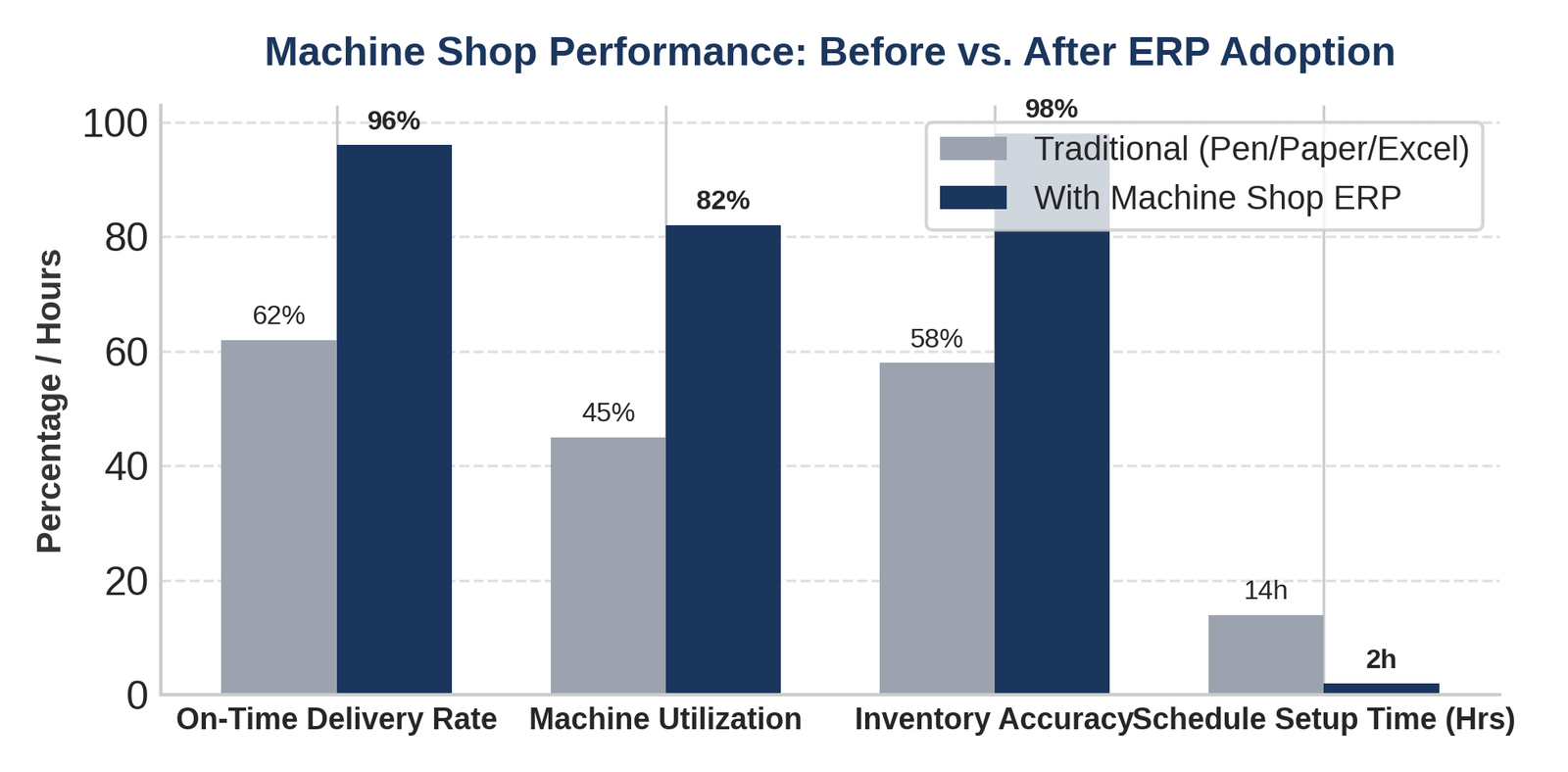
Here is a clear comparison showing how replacing manual methods with a dedicated Machine Shop ERP transforms daily operations:
Operational Area | Manual / Spreadsheet Shop | |
Job Scheduling | Whiteboards & sticky notes; takes 2+ hours daily to update. | Automated drag-and-drop digital schedule; updates instantly. |
Material Tracking | Physical counts; frequent surprise shortages mid-shift. | Real-time stock reservation and automatic purchase alerts. |
Order Tracking | Staff walk floor searching for paper travelers. | Instant status dashboard visible on any computer or mobile tablet. |
Quality Control | Paper inspection sheets; easy to skip or lose. | Digital inspection gates built directly into shop floor job steps. |
On-Time Delivery Rate | Averages 60% – 70% with frequent emergency rushes. | Consistently exceeds 95%+ with predictable throughput. |
The graph below illustrates the measurable performance improvements machine shops achieve after transitioning to an ERP system:
Understanding ERP: The Restaurant Kitchen Analogy
To make this ultra-simple for anyone—whether you are an experienced shop owner or an 8-year-old learning about manufacturing—think of a machine shop like a busy restaurant kitchen:
- The Orders: Customers order custom meals (custom machined metal parts).
- The Kitchen (Shop Floor): Chefs use stoves, knives, and ovens (CNC mills, lathes, and drills).
- Without ERP (The Chef-in-Chaos): The waiter writes orders on tiny sticky notes, forgets to buy steak, and three cooks try using the same stove at once. Meals arrive cold, late, or wrong.
With ERP (The Master Head Chef System): Orders go straight to digital screens at each station. The fridge auto-orders ingredients before they run out. Every dish comes out hot, fast, and exactly as
How to Choose and Implement an ERP Without Stopping Work
Upgrading your shop floor doesn’t mean shutting down production for a month. Here is a simple, stress-free 4-step implementation roadmap:
- Step 1: Audit Your Biggest Bottleneck: Identify what causes 80% of your current delays—is it material shortages, machine downtime, or bad scheduling?
- Step 2: Choose Machine-Shop-Specific Software: Avoid generic corporate ERPs. Look for software built specifically for job shops with features like CAD integration, dynamic scheduling, and tool tracking.
- Step 3: Involve Your Machinists Early: Get your shop floor team hands-on with touchscreen tablets early on so they feel confident and empowered.
- Step 4: Start Small & Scale Up: Deploy ERP scheduling on one key work center or cell first, perfect the workflow, then roll it out across the entire facility.
Final Thoughts: Stop Firefighting and Start Growing
Production delays aren’t an inevitable part of running a machine shop—they are simply a symptom of outdated, disconnected tools. By giving your team real-time visibility, automated inventory management, and dynamic scheduling with a Machine Shop ERP, you replace daily fire-fighting with smooth, profitable, and predictable manufacturing.
🚀 Ready to Eliminate Shop Floor Delays? Don’t let manual scheduling cap your shop’s growth! Explore how our tailored Machine Shop ERP software can transform your productivity today. Schedule your personalized 15-minute demo now! |
Call to action
Stop Firefighting and Start Delivering On Time!
Tired of missing deadlines, scrambling for raw stock, and dealing with shop floor chaos? Modernize your machine shop with an all-in-one ERP built specifically for precision manufacturing.

We help your business grow with powerful SaaS solutions
Resources
© 2026 Texono. All rights reserved.