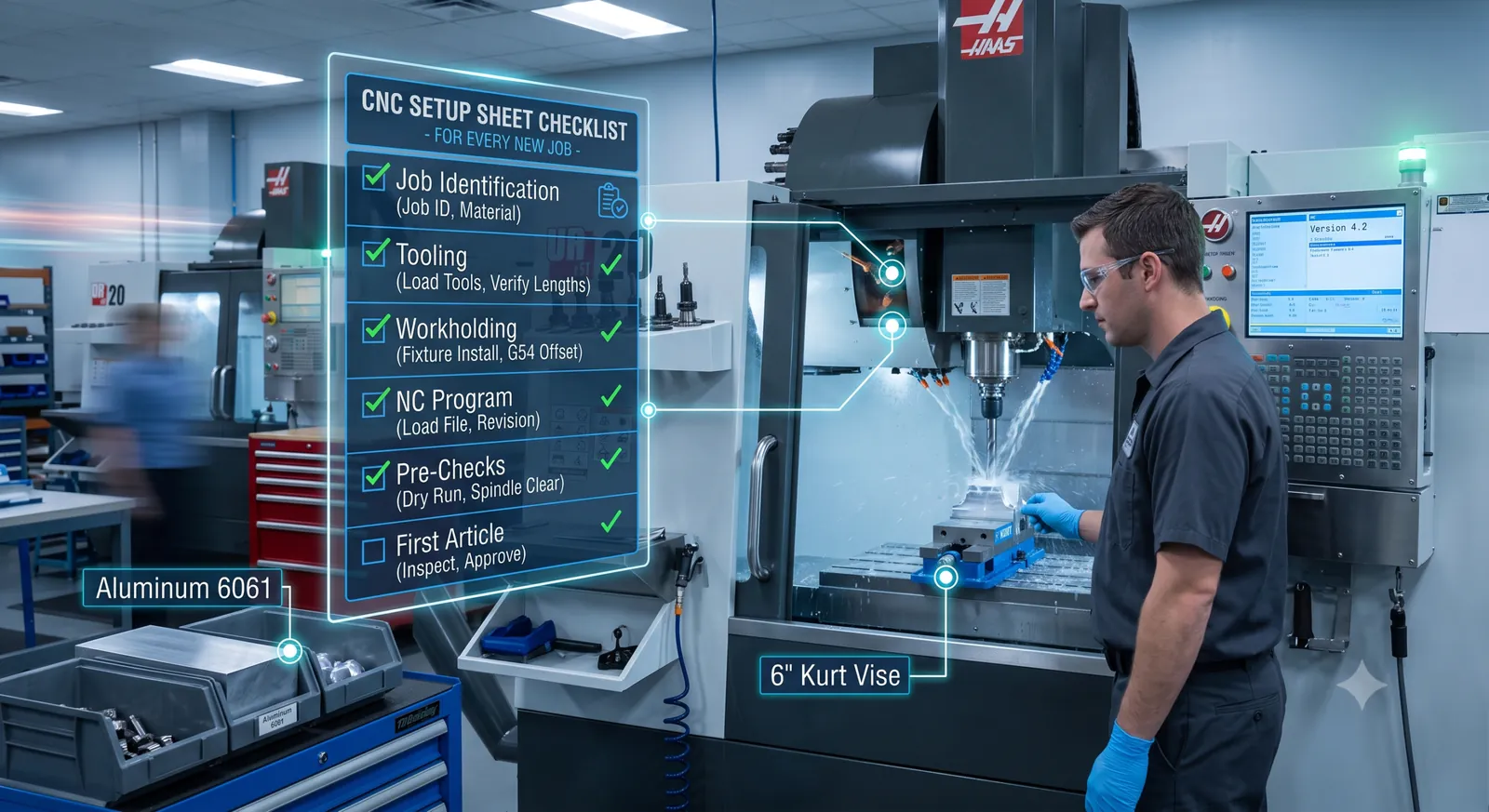
Learn how accurate tooling data and smart management can improve CNC performance, reduce downtime, and boost productivity.

In CNC machining, tooling is at the core of every operation. However, even the best tools can underperform if the information associated with them is inaccurate or outdated. Poor tooling data leads to errors, machine downtime, and reduced productivity.
By optimizing tooling information, machine shops can improve efficiency, ensure accurate setups, and maximize tool life. With the help of digital setup sheets and integrated tooling systems, manufacturers can streamline operations and achieve consistent, high-quality results.
Why Tooling Information Matters in CNC Machining
Tooling information includes critical details such as tool type, dimensions, offsets, cutting parameters, and maintenance history. This data directly affects:
- Setup accuracy
- Machining precision
- Tool life and performance
- Production efficiency
Accurate tooling data ensures that operators can set up machines correctly and avoid costly errors.
Common Challenges in Tooling Management
Many machine shops struggle with managing tooling information effectively. Common issues include:
- Outdated Tool Data – Incorrect or missing information leads to setup errors
- Lack of Centralization – Tool data stored across multiple systems creates confusion
- Manual Tracking – Time-consuming and prone to human error
- Tool Availability Issues – Difficulty in tracking tool inventory and usage
These challenges result in delays, reduced efficiency, and increased operational costs.
Best Practices for Optimizing Tooling Information
1. Centralize Tooling Data
Store all tooling information in a single, digital system accessible to operators, engineers, and managers. This ensures consistency and eliminates confusion.
2. Maintain Accurate and Updated Data
Regularly update tool specifications, offsets, and maintenance records to ensure accuracy.
3. Standardize Tool Naming and Classification
Use consistent naming conventions and categories to make it easier to identify and select tools.
4. Track Tool Usage and Maintenance
Monitor tool life and maintenance schedules to prevent unexpected failures and downtime.
5. Use Digital Integration for Automation
Integrate tooling data with setup sheets and machine systems to automate tool selection and setup processes.
✅ Accurate tool selection
✅ Reduced downtime
✅ Improved machining quality

Role of Digital Setup Sheets and Tool Crib Integration
Digital setup sheets and tool crib systems play a crucial role in optimizing tooling information. They allow:
- Real-time synchronization of tooling data
- Automatic tool selection based on machine requirements
- Validation of tool availability before setup
- Easy access to tool specifications and instructions
This integration eliminates manual errors and ensures that operators always work with the correct tools.
Real-World Benefits for Machine Shops
Machine shops that optimize tooling information experience measurable improvements:
- Reduced setup time
- Increased machine utilization
- Improved product quality
- Extended tool life
- Lower operational costs
With accurate and accessible tooling data, shops can operate more efficiently and consistently.
Conclusion / Key Takeaways
Optimizing tooling information is essential for achieving maximum CNC efficiency. By centralizing data, maintaining accuracy, and leveraging digital tools, machine shops can reduce errors, improve productivity, and enhance overall performance.
Key Benefits:
- Better tool management
- Faster and more accurate setups
- Reduced machine downtime
- Improved production efficiency
Call-to-Action
Want to optimize your tooling information and improve CNC efficiency?
Discover how Texono’s Setup Sheet Application with Tool Crib Integration can help you streamline tooling management and boost productivity.